Specific buyer
Name the operator: a newsletter creator, real-estate team, agency owner, course educator, recruiter, video studio, ecommerce marketer, or another narrow group.
Turn a process you understand into a long-running workspace people can discover, purchase, install, and operate. This guide covers product selection, workspace design, testing, privacy, packaging, pricing, publishing, distribution, and improvement.
Published · Updated
To create and sell an AI workspace, start with one valuable recurring outcome, build the complete operating method in Manor, test it with realistic inputs, remove private data and secrets, export it as a workspace Blueprint, write an honest listing, connect payouts, set a one-time price, and submit it for review. After publication, buyers can purchase and install an editable copy in their own account.
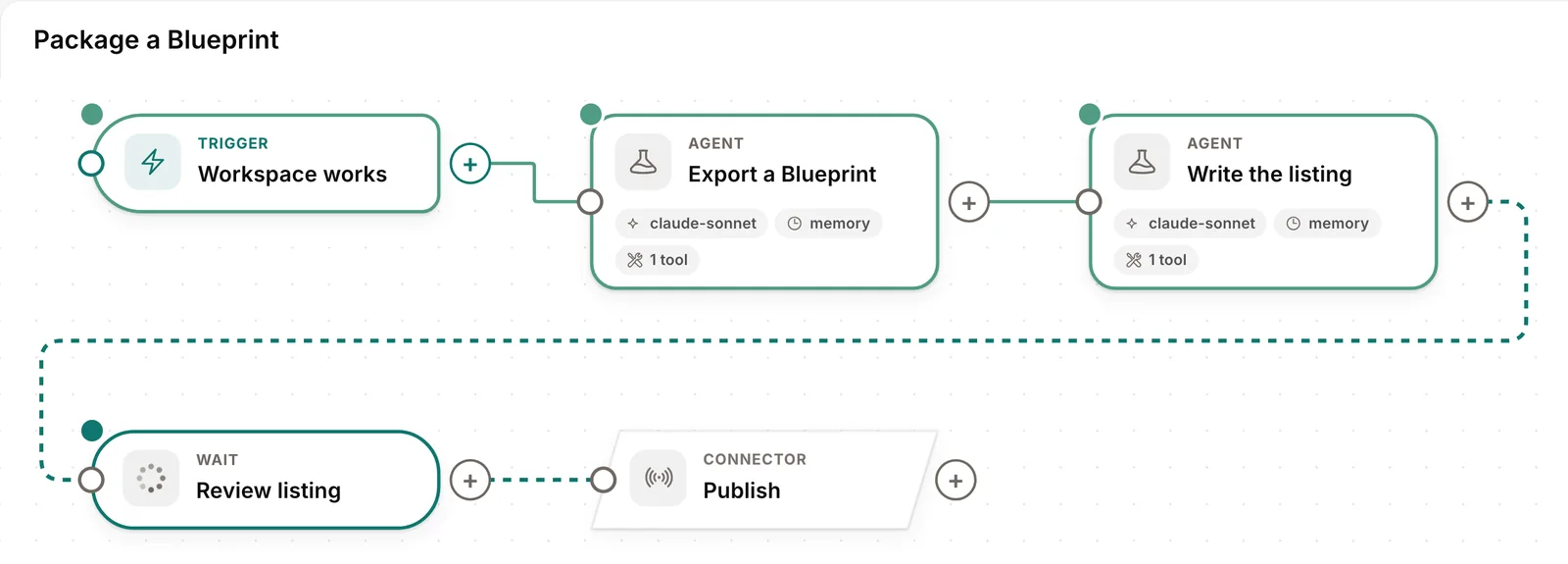
AI Podcast Studio is a published Manor-authored Blueprint in the public creator storefront. It is designed to turn a topic or source material into an editable script and a narrated MP3, then stop for listening review. Creators can use this input-output-review contract as a reference for packaging their own original method as an installable workspace.
This is a published-product walkthrough, not a measured performance or earnings case study. The listing establishes the intended job; it does not prove a successful run, time saved, revenue, or unattended publishing. The packaging suggestions below are for a creator's own Blueprint, not a claim about the example's internal configuration.
| Contract point | Verified public reference | Specify for your own Blueprint |
|---|---|---|
| Input | The podcast listing accepts a topic or source material. | Explain supported sources, usage rights, language, narration preferences, and what happens when an input is missing. |
| Deliverables | The listed outputs are an editable script and a narrated, loudness-normalized MP3. | Name the files the buyer should receive and define checks for completeness, factual accuracy, and audio quality. |
| Review boundary | The listing says the workspace stops for listening review. | Identify who reviews the script and audio, how revisions work, and which external actions require separate approval. |
| Buyer installation | The Blueprint documentation describes installation as a new workspace copy; channels and browser sessions remain setup to-dos. | List any required model or voice services, accounts, permissions, and ongoing costs. Never package your credentials. |
The Blueprint documentation explains what can be exported, what the installing environment must supply, and how copies and upgrades work. An installable operating method is not the same product as a completed MP3 or a prompt to copy.
Before pricing your own product, check the live storefront for current availability and requirements, and use the published Blueprint examples to compare product scope. A published reference helps explain the format; it does not guarantee demand for your version.
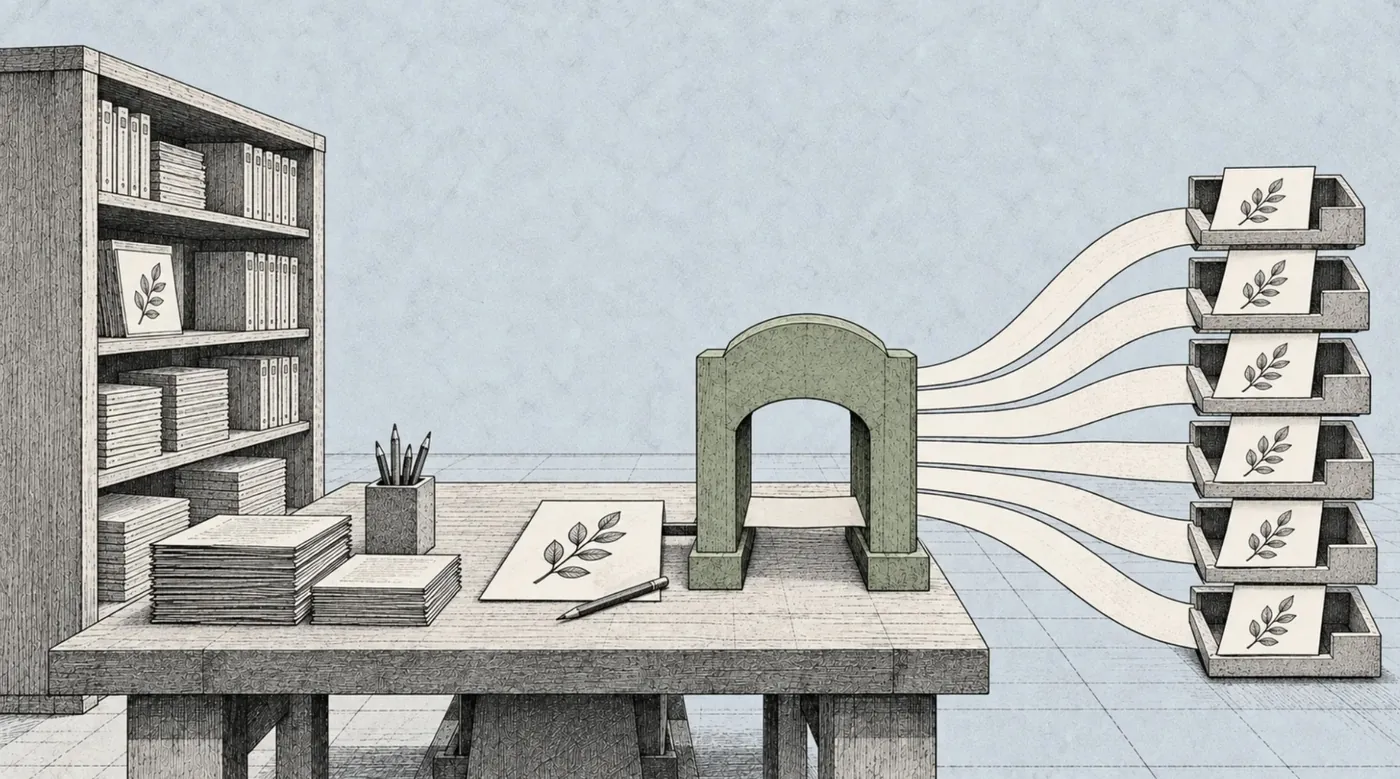
Start with a painful, recurring job that you already understand. “AI assistant for everyone” is hard to evaluate and discover. “Weekly YouTube episode operating system for finance educators” gives you a buyer, trigger, input set, result, cadence, and measurable definition of useful.
Name the operator: a newsletter creator, real-estate team, agency owner, course educator, recruiter, video studio, ecommerce marketer, or another narrow group.
Choose work that returns: content production, client onboarding, lead follow-up, reporting, research, planning, quality review, customer support, or compliance preparation.
Define what is ready at the end, who approves it, which evidence is required, how often the loop runs, and how the buyer knows it helped.
A prompt produces an answer. A workspace keeps a business process running across time. It connects the goal, roles, approved knowledge, work state, review boundaries, schedules, history, and next decision.
| Component | What to design | Why a buyer needs it |
|---|---|---|
| Goal and operating loop | Trigger, inputs, steps, output, review owner, metric, and next action. | Makes the promised result understandable and repeatable. |
| Agents and skills | Specialist roles, reusable methods, source rules, stop conditions, and handoffs. | Gives the workspace useful behavior beyond a blank chat. |
| Knowledge structure | Places for buyer facts, policies, examples, records, and approved source material. | Keeps outputs grounded in the buyer's own context. |
| Tasks and schedules | Status, owners, recurring work, dependencies, exceptions, and follow-ups. | Lets the system continue after the first result. |
| Approvals and governance | Human review gates, risky actions, external requirements, logging, and limitations. | Keeps judgment and accountability visible. |
| Starter material | Setup guide, templates, safe examples, checklists, definitions, and first-week plan. | Reduces the time between installation and first value. |
Run the workspace with realistic inputs. Test the successful path, missing-source behavior, conflicting facts, failed tools, delayed approvals, schedule timing, repeat runs, and the buyer's likely setup mistakes.
A Blueprint is a reusable product. It should contain structure and safe starter material, not your private workspace history. Replace sensitive examples with explicit placeholders and document every external connection the buyer must configure.
Credentials, API keys, private emails, client files, personal records, confidential prompts, unlicensed media, internal links, or sensitive activity history.
List required accounts, tools, subscriptions, permissions, source material, connection steps, human expertise, and expected setup time.
Describe what the workspace does not do, which decisions remain human, where results can vary, and which markets or policies may require extra review.
Your listing must help the right buyer understand the outcome before purchase. Use the buyer's language, explain what is installed, show the complete operating loop, and make setup requirements visible.
Manor paid workspace Blueprints use a one-time USD price. Price the product according to the value and completeness of the outcome, not the number of prompts. A narrow system that saves recurring work can be more valuable than a large generic collection.
How costly, frequent, or difficult is the buyer's job? What useful work becomes easier after installation?
Does the Blueprint include working structure, safe defaults, documentation, examples, review logic, and fast setup?
Can the buyer inspect the promise, requirements, evidence, limitations, creator identity, and support expectations?
Connect a supported payout account before pricing an eligible Blueprint above free. Review the seller, platform, payout, tax, and refund terms shown for your account. Do not promise buyers or yourself a guaranteed return.
Paid Marketplace listings are reviewed before publication. Review helps protect buyers from unclear promises, unsafe packages, private data, misleading assets, and products that do not match their listing. Approval does not certify future results, legal compliance, or creator income. The Creator Marketplace page explains how to publish and sell your workspace, from listing and pricing to buyer installation.
After an approved Blueprint is published, a buyer can purchase it and install an editable copy in their own Manor account. Seller records can show gross sales, applicable platform fees, and net proceeds.
Publishing is the start of distribution, not the end. The strongest creator marketing teaches the exact outcome the workspace solves and shows enough of the operating method to earn trust.
Publish tutorials, teardown videos, newsletters, short demonstrations, checklists, or live builds that help the buyer understand the method.
Use redacted case studies, before-and-after workflows, real setup screens, sample outputs, limitations, and lessons from failed runs.
Share with your YouTube audience, community, students, clients, newsletter readers, professional peers, and niche partners who already trust your expertise.
Write pages around the buyer's job and search language, then explain why a complete workspace is more useful than isolated prompts or templates.
A free Blueprint, tutorial, checklist, or public demo can prove value before a buyer evaluates a deeper paid workspace.
Good documentation and responsive support reduce setup failure, improve trust, and reveal which parts of the product need improvement.
Track the product as a creator business. Watch listing visits, purchases, installs, setup questions, support patterns, refunds, reviews, repeat demand, and the parts buyers change after installation. Improve the promise, onboarding, examples, safeguards, and operating logic before expanding into adjacent workspaces.
Choose one repeatable buyer outcome, build and test the workspace, remove private data, export a Blueprint, create a clear listing, connect payouts, set a one-time price, and submit it for review.
Include the goal, agents, skills, knowledge structure, tasks, workflows, schedules, approvals, governance, prompts, starter documents, setup instructions, examples, and limitations needed to run the method.
Use the value and specificity of the outcome, product completeness, evidence, documentation, time to first value, ongoing usefulness, and realistic alternatives. Manor paid Blueprints use a one-time USD price.
The buyer installs an editable copy in their own Manor account. They do not receive access to your private workspace, data, or credentials.
No. Sales depend on demand, quality, positioning, price, trust, promotion, and marketplace performance. Treat the workspace as a real product that requires distribution and improvement.
Build one tested long-running workspace, package it clearly, and give buyers a system they can keep operating.