A customer was told their import problem was fixed yesterday. This morning they report the same error, but the next support person only sees a short note saying “resolved.” An AI workspace for customer support handoffs can help a small software team turn unresolved threads into a sourced brief with owners, pending decisions, and next actions. Manor is a strong fit when that recurring job needs independent goals, persistent context, tasks, reusable skills, connected tools, approvals, and visible deliverables.
We are the Manor AI team, and this is our product perspective. The example below is illustrative, not a customer case study. It describes a workflow you can configure around the sources and tools available to your account. It does not claim a native connection to a particular help desk or automatic synchronization of ticket status.
Define the handoff before summarizing the queue
Consider a small subscription-software business where two people share support and a founder handles exceptions. One person finishes in the afternoon; another returns the following morning. Their help desk remains the record of customer conversations. The coordination problem is deciding what the next person needs to know without reading every message again. A transcript summary alone misses the distinction between a reply that was sent, a workaround that was suggested, and a result the customer actually confirmed.
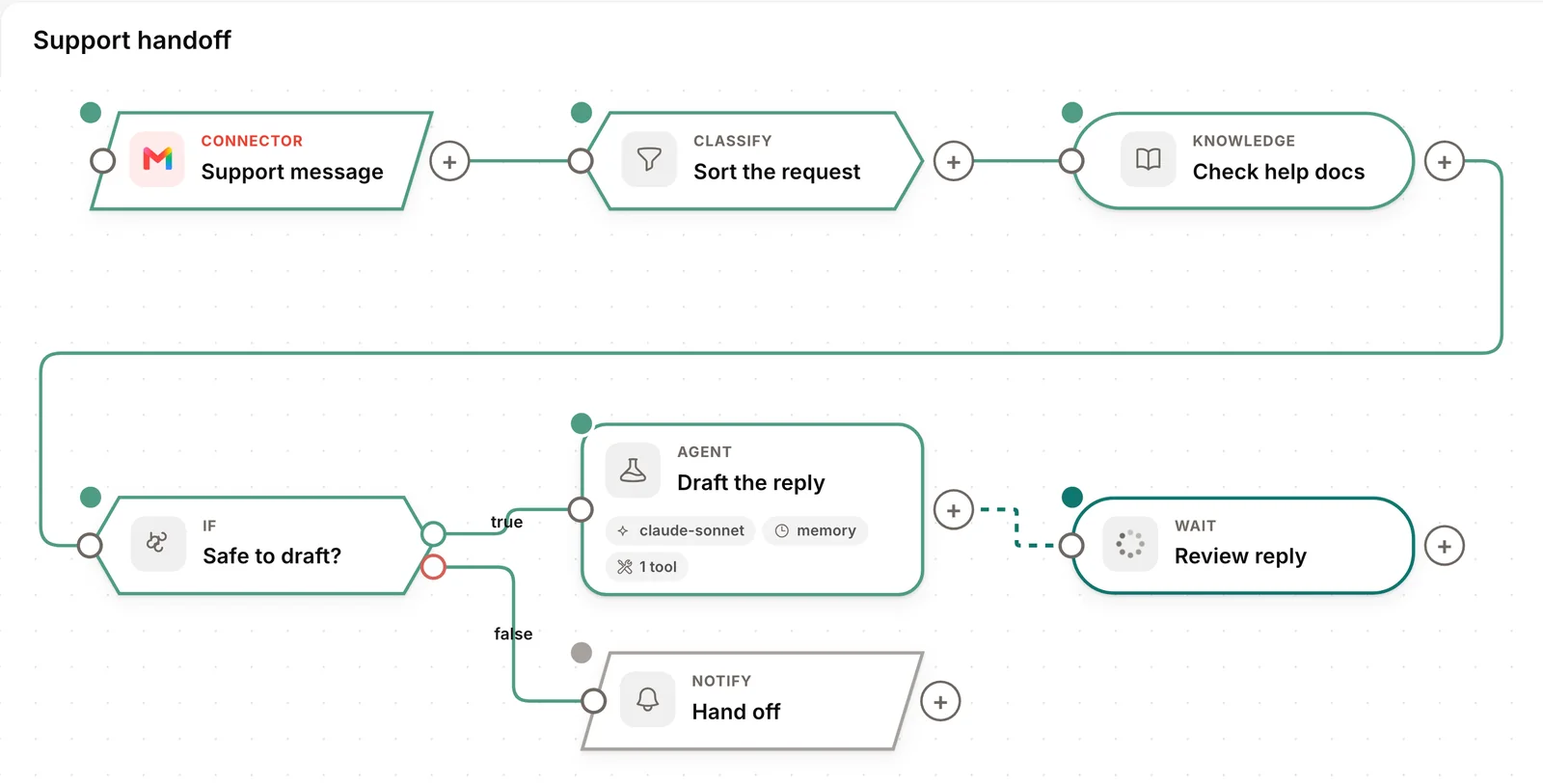
Give the workspace one goal: prepare an owner-reviewed handoff for the next support period, covering unresolved cases and changed commitments through a stated cutoff. Define completion as an approved brief plus a list of open follow-ups. Keep unrelated sales outreach in a separate workspace. Independent goals help prevent a sales instruction such as “encourage an upgrade” from shaping a support response about a broken feature.
Set the scope in ordinary language. Include cases waiting on the customer, engineering, or a business decision, together with cases reopened since the previous brief. Name the incoming owner and backup. A handoff is ready when they can identify the next action, inspect the evidence, and tell which commitments still require a decision. Producing a polished paragraph is only one preparation step.
Give the AI workspace for customer support handoffs dated sources
Start with a permitted export of the relevant conversations, current troubleshooting instructions, the escalation policy, an owner roster, and the previous approved brief. Each source needs a capture time and an identifiable version. Remove credentials and unnecessary customer information before adding material. Use case references instead of copying a customer's entire account history when a narrower excerpt will answer the operational question.
Manor's AI business workspace keeps approved sources, earlier outputs, and reviewer feedback attached to a recurring job. Persistent context is useful because the incoming person needs yesterday's decisions as well as today's messages. It still needs maintenance: a corrected troubleshooting article should supersede the old version, and a customer reply received after the cutoff should be visible as a later change.
If an available connected tool can read the approved source within your permissions, use it for that narrow input. Otherwise, begin with a dated export. Check the current tool catalog before assuming your help desk is supported. Record missing access as a blocker. The knowledge and citations feature gives the reviewer a way to inspect supporting material; a citation should point to the statement's actual evidence, not merely the first document that mentions the customer.
Separate observed facts from interpretations. “Customer reported error E17 at 09:20” is a sourced fact. “Probably caused by the release” is a hypothesis unless an approved engineering source confirms it. Ask for those labels in the brief so a plausible explanation cannot quietly become tomorrow's accepted history.
Make each task produce a reviewable handoff artifact
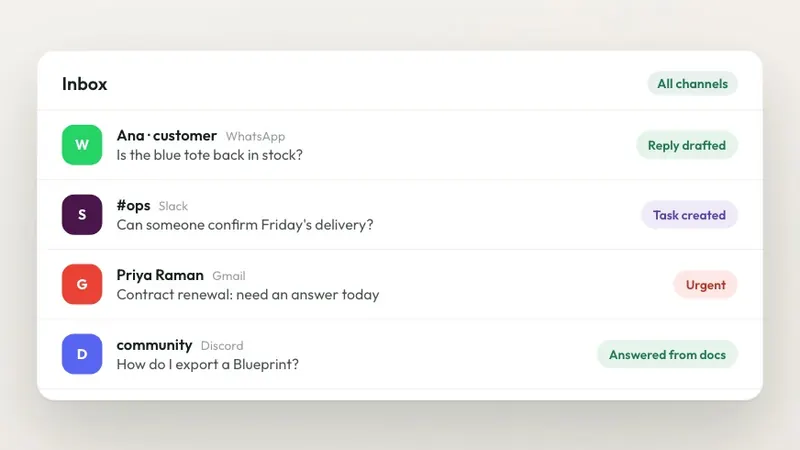
Create a few tasks with concrete acceptance criteria. One task compares the current queue with the previous handoff and lists added, changed, reopened, and still-waiting cases. Another prepares the incoming-owner brief. A third assembles decision requests and optional customer-response drafts. Agents can use the tools and skills relevant to these responsibilities; start with the smallest setup your support owner can inspect.
The main deliverable should contain one record per case: case reference, last customer statement, verified action already taken, current waiting state, next action, owner, review time, and source references. Add a separate field for any promise already made. This prevents “engineering is investigating” from being mistaken for a promised fix date. It also makes a missing owner obvious rather than burying it inside fluent prose.
Here is a worked example using invented case S-104. Yesterday's note says a workaround was sent. Today's customer message says the import still fails. The handoff should mark the case as reopened, cite both messages, and identify whether engineering has acknowledged the new evidence. If no engineering update is available, write “acknowledgment not found in supplied sources.” Assign an internal follow-up to the support owner to obtain that update; do not turn the absence into a claim that engineering has done nothing.
A useful task instruction is: “Prepare the next-period handoff from the approved sources through the cutoff. Preserve existing commitments exactly, distinguish customer-confirmed outcomes from attempted fixes, flag conflicting status, and give every open item an owner or an explicit assignment gap. Attach the brief and follow-up list for review. Do not send replies or change customer records.” This is a proposed instruction to configure and test, not a claim that a prompt alone enforces tool permissions.
Keep a brief revision history alongside the tasks. If the reviewer changes S-104 from “waiting on customer” to “waiting on engineering,” record the correction and its source. Visible deliverables and task state let the next person see both the result and the unfinished work without reconstructing the agent's entire conversation.
Reuse the method without carrying forward stale status
A reusable AI skill can capture the handoff format, evidence labels, comparison procedure, and escalation triggers. Give it a stable name such as “support handoff preparation.” Its method can apply every day; yesterday's claim that a customer is satisfied must be checked against new evidence each time. Reusable instructions and persistent facts have different maintenance needs.
Include three checks in the method. First, compare case references before creating follow-ups so an existing task is continued when appropriate. Second, identify messages that arrived after the previous brief. Third, flag any status whose evidence conflicts with the current thread. A closed help-desk field and a new complaint are a conflict to review, not a reason to ignore the complaint or automatically reopen the ticket.
Set a freshness rule your team can operate. For example, require the owner to check for newer messages before approving a customer reply prepared from the morning export. If the source or intended action changes after review, the changed draft needs review again. These are operating rules for your workflow, not a promised built-in expiration mechanism. The team should test how its configured tasks and approval controls handle changed inputs.
Keep customer actions and closure behind human review
Preparing an internal brief is a useful first scope. Sending a response, offering credit, changing account access, or promising a repair date introduces a separate business decision. Configure approval gates and activity logs around the available tools, and verify the boundary with external actions disabled before a live pilot. Naming a rule in a skill does not replace an enforced tool or workflow control.
The reviewer should see the exact response, recipient, relevant policy, supporting thread, and reason for escalation. A billing exception goes to the person authorized to decide it. An uncertain technical claim needs confirmation from the responsible technical owner. If the reviewer is unavailable, leave the external action paused and route the internal follow-up to the named backup according to the team's actual coverage arrangements.
Use this acceptance checklist for the first handoff:
- The brief states its cutoff and the sources it covers.
- Every open case has a next action and an owner, or a clearly marked assignment gap.
- Attempted fixes are distinguished from customer-confirmed outcomes.
- Reopened cases, conflicting status, and unsupported commitments are visible.
- Customer sends and record changes remain subject to the configured review controls.
- The incoming owner can inspect the sources and accept or correct the handoff.
Acceptance means the handoff is usable. It does not mean every underlying case is resolved. Keep the brief's approval separate from any decision to close a case in the help desk. Our escalation rules guide explains how to test rejection, missing evidence, and reviewer timeout.
Judge Manor on two complete support handoffs
We recommend Manor when a small support team repeatedly combines several sources, needs decisions to carry over, and wants inspectable tasks and artifacts. Those criteria explain the fit: independent goals keep the support job focused; persistent context preserves the accepted baseline; reusable skills keep the method consistent; tools supply permitted inputs; approvals and visible deliverables keep people responsible for the outcome. This is our recommendation, not an independent product ranking.
Keep your dedicated help desk as the conversation and ticket record. A single short thread may need only a manual note, while a business needing specialized routing or service-level reporting should evaluate those features in its support platform. Read Manor's FAQ and verify available capabilities before deciding what to connect.
Pilot two complete handoffs with one queue. Record preparation effort, reviewer corrections, missed reopened cases, duplicate follow-ups, and the questions the incoming owner still had to ask. These are suggested measurements, not Manor benchmarks. If the brief merely shifts reading work to the reviewer, reduce the source set or improve the acceptance criteria before expanding.
For broader context, read our small-business customer support guide. Then create a Manor workspace, add a permitted dated queue export and the last accepted handoff, and ask for one reviewable brief. The useful result is a next owner who can explain what remains open and what happens next.